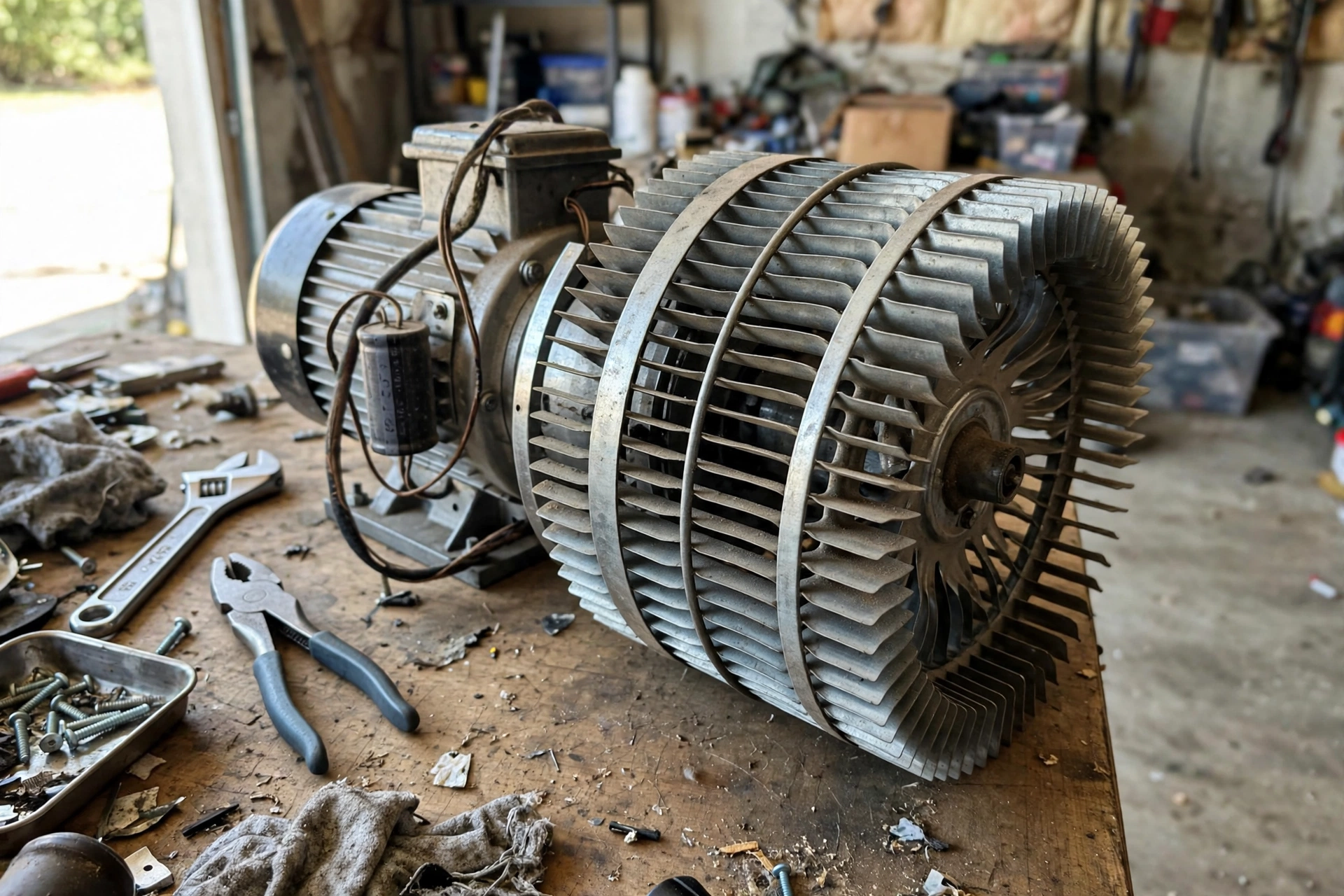
Weak airflow and loud blowers trace back to motors, capacitors, and wheels. We test each one and repair the airflow your home was designed for.
The blower motor moves warm air through your ducts, and when it weakens or fails, rooms cool even though the burners work. Manassas Furnace Pros tests blower motors, run capacitors, and blower wheels across Manassas and Prince William County, repairs the failed component, and confirms strong, even airflow at the registers. If your furnace hums, rattles, or barely pushes air, call (703) 962-7410 to schedule blower motor repair for your home today.
Blower problems announce themselves through the vents. Airflow feels thin, distant rooms in your Manassas home fall behind, the furnace runs longer, and the cabinet may overheat and shut down on the limit switch because heat is not being carried away. Other times the blower never starts at all, and the burners shut down shortly after ignition for the same reason. Either pattern points to the air side of the system rather than the heating side. Furnace age and duty cycle shape blower wear, and systems serving both heating and cooling in Manassas accumulate hours in every season of the year. A motor that sounds acceptable in October may struggle by February under daily demand. Testing under real load, with panels in place and filters fitted, gives the honest picture of remaining blower health.
Testing sorts out which component is responsible. A failed run capacitor can leave a healthy motor humming and unable to start, while worn bearings or a failing motor winding produce heat, noise, and weak delivery even when it does run. We test the capacitor under load, check motor amp draw, inspect the blower wheel for buildup or damage, and confirm the control board is sending the right speed signal before recommending any replacement. Dust is the quiet enemy in the blower compartment, coating the wheel, insulating motor windings, and adding weight that bearings must carry with every start. Where buildup is heavy, we discuss its likely source, often filtration gaps or return leaks. Cleaning without addressing the source only schedules the same problem to return during a later Prince William County heating season.
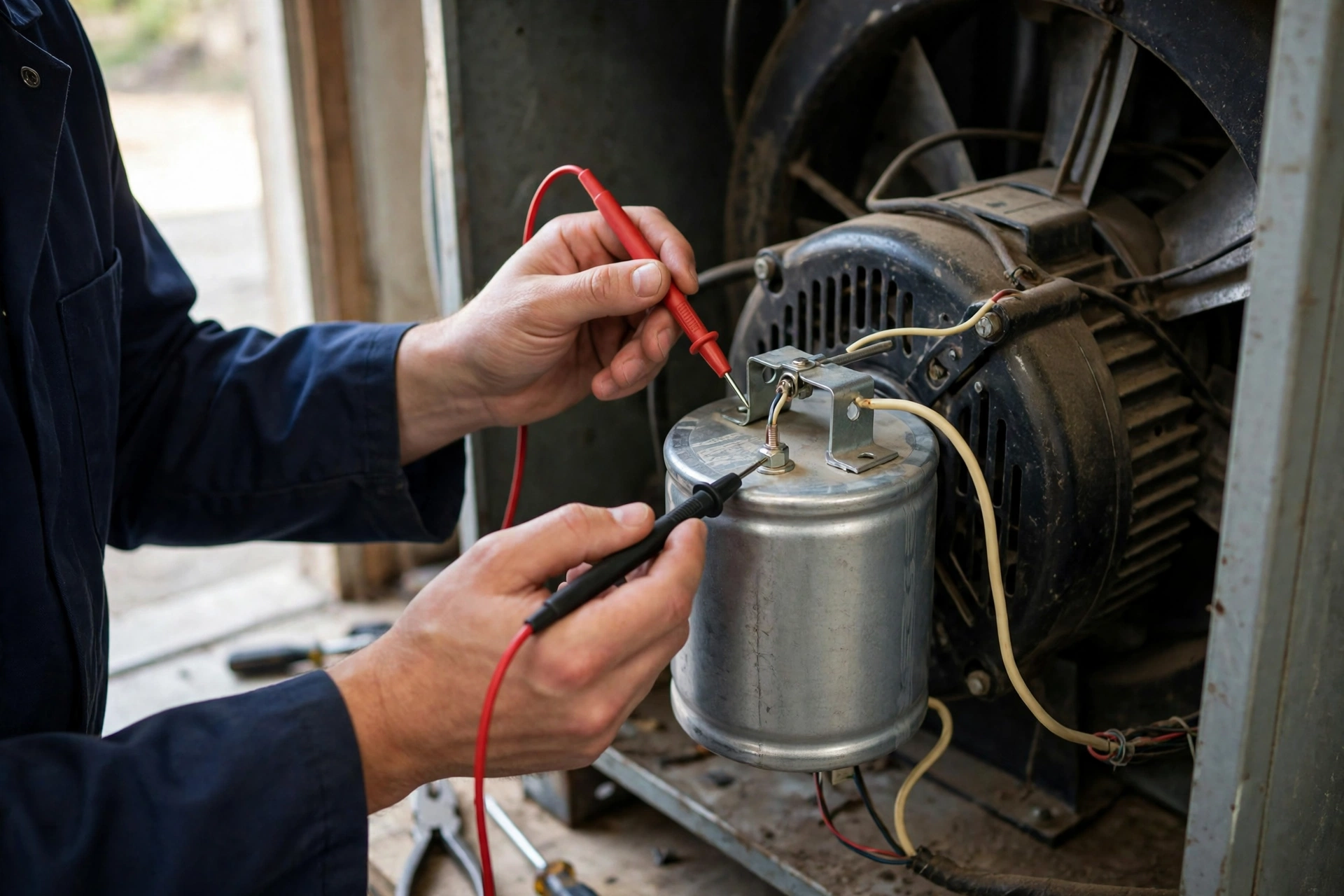
The run capacitor is small, inexpensive compared with a motor, and responsible for a large share of blower no start calls in Prince William County. Replacing it when testing shows weakness restores starting torque and protects the motor from the strain of repeated failed starts. We match the rating exactly and check that the motor starts cleanly afterward, because fitting the wrong capacitor can shorten the life of the very motor it is meant to help. Speed selection after a motor change is verified against temperature rise, because moving air too slowly overheats the cabinet while moving it too quickly can feel noisy and drafty. The manufacturer range guides the setting, and register checks confirm the result in the rooms. That verification step separates a fitted repair from a simple part swap every time.
When the motor itself has failed, replacement includes more than swapping the unit. The blower wheel is cleaned and checked for balance, mounting is secured to prevent vibration, wiring and speed taps are set for the furnace requirements, and airflow is verified at the registers. A dirty wheel can move far less air than a clean one, so this attention restores delivery as well as reliability. The result should be noticeably stronger, quieter airflow throughout the home. Intermittent blower operation, where air starts and stops mid cycle, often traces to a heat sensitive motor winding or a control relay rather than the capacitor. Those faults need run time to reveal themselves, so the visit includes an extended test cycle. Patience here prevents the classic outcome of a repair that works until the technician leaves your Manassas home.
Sound changes are often the earliest warning a blower gives. Rattling can mean a loose wheel or debris in the housing, squealing often points to bearing wear, and a deep hum without rotation suggests a starting problem. Scraping is the most urgent sound, since a wheel contacting the housing can damage both parts quickly. Noting when the noise happens, at startup, during the cycle, or at shutdown, helps narrow the cause. Homes with additions or finished lower levels sometimes ask more of the blower than the duct system can deliver, and a healthy motor cannot overcome undersized runs. We distinguish equipment failure from design limitation honestly during diagnosis. Where the limit is structural, expectations are set clearly and practical balancing steps are suggested instead of unnecessary motor work.
We trace noises methodically in Manassas homes rather than guessing, because duct vibration and cabinet resonance can imitate motor faults. Isolating the blower, running it through its speeds, and listening at the housing separates a true motor or wheel problem from a loose panel or duct rattle. When the repair is finished, we run the system long enough to confirm the sound is gone and airflow is steady in every part of the house. At completion, the blower is run through a full heating cycle and a fan only cycle, doors and panels are secured, and the area is left clean. You will know which part failed, why it likely failed, and what was verified afterward. Clear records help any future visit, and they give you confidence that airflow was restored, not merely attempted, that day.
Weak vent airflow starts with the simplest causes. A clogged filter can strangle the blower, closed registers reduce delivery room by room, and a blower wheel coated in buildup moves a fraction of the air it should. Each of these is checked before motor failure is assumed, because replacing a motor will not fix air that cannot get through the system in the first place. A blower that starts slowly, like a fan taking a breath before spinning up, is showing classic capacitor or bearing strain. That symptom often appears weeks before a complete no start failure.
When basics check out, the motor and its capacitor move to the front of the line. A weak capacitor lets the motor run below its proper speed, and worn windings do the same under load. The furnace may still heat, but temperature rise climbs, the limit switch edges toward tripping, and comfort fades across your Prince William County home. Registers whistling after airflow changes can mean the system is finally moving the air it should through runs that are partly closed or undersized. We check damper positions and grille condition before assuming a new problem exists.
The fix follows the finding, from cleaning and capacitor replacement to a full motor change with airflow verification. Avoid running the furnace for days with barely moving air, since overheating cycles stress the heat exchanger. Call (703) 962-7410 and describe the airflow change, including when you first noticed it. If airflow loss followed a filter upgrade to a much denser type, mention it, because high restriction filters can starve some blowers noticeably. Filtration choices involve tradeoffs that depend on the equipment. We can suggest a filter style that protects the system without choking the airflow your furnace was designed to move through the house.
A hum with no airflow usually means the blower motor is receiving power but cannot start turning. The run capacitor is the classic cause, because it provides the extra push the motor needs at startup. Without it, the motor sits and hums, draws excess current, and heats up, which can damage the motor itself if the system keeps trying to run. A motor that trips the limit switch by running too slowly may still sound normal from the next room, which is why homeowners often suspect the burners first. Temperature rise testing exposes the truth quickly.
Seized bearings or a jammed blower wheel can produce the same sound, which is why testing matters more than pattern matching. We check whether the wheel spins freely by hand with power off, test the capacitor, and measure motor draw. That sequence identifies whether a small part or the whole motor needs attention in your Manassas home. Turn the furnace off if you smell hot electrical odor from the vents or hear the blower struggling repeatedly at startup. Motors under that kind of strain can fail completely and complicate the repair.
Turn the system off at the thermostat if the hum persists without air movement, and do not keep cycling it in hope. A motor left humming can overheat and turn a capacitor repair into a motor replacement. A prompt visit keeps the repair as small as the fault actually is. After a blower repair, give the system a day of normal use and note any room that still lags noticeably behind the others. One follow up observation like that helps confirm whether the remaining issue is duct related. It turns the repair into a verified result across the whole home, not just at the furnace cabinet door.
Airflow questions from homes with weak or noisy vents.
Describe what your furnace is doing and we will point you to the right next step.
Call (703) 962-7410A capacitor replacement is usually quick once testing confirms the fault, while a motor replacement takes longer because the wheel, mounting, and wiring must be set and verified. Either way, we finish by running full heating cycles and checking airflow at the registers before leaving your home.
Yes, buildup on the wheel blades changes their shape and grip on the air, so the blower spins but moves far less air. Rooms cool, run times lengthen, and the furnace can overheat. Cleaning the wheel during motor work is standard because the improvement is often immediately noticeable.
It depends on the noise. Light rattles may be a loose panel, but scraping, grinding, or squealing suggests mechanical wear that worsens with use. Running a failing blower also risks overheating shutdowns. Having the sound identified promptly is safer and usually keeps the repair smaller.
The inducer motor is a small fan that clears exhaust gases and proves venting at the start of a heating cycle. The blower motor is the larger fan that moves heated air through your ducts.
A blower that never stops can be set to on at the thermostat, or it can point to a control or limit switch issue holding the fan circuit closed. Check the fan setting first.
No heat tonight? We find the failed part and get the heat back on, around the clock.
Ignition, burner, and gas control problems found by sequence testing and fixed.
Heat strips, sequencers, and air handler faults diagnosed and repaired.
A full seasonal tune-up that keeps heat steady and catches wear early.
Whistling vents and chilly rooms point at the blower path. We test it end to end.
Call (703) 962-7410