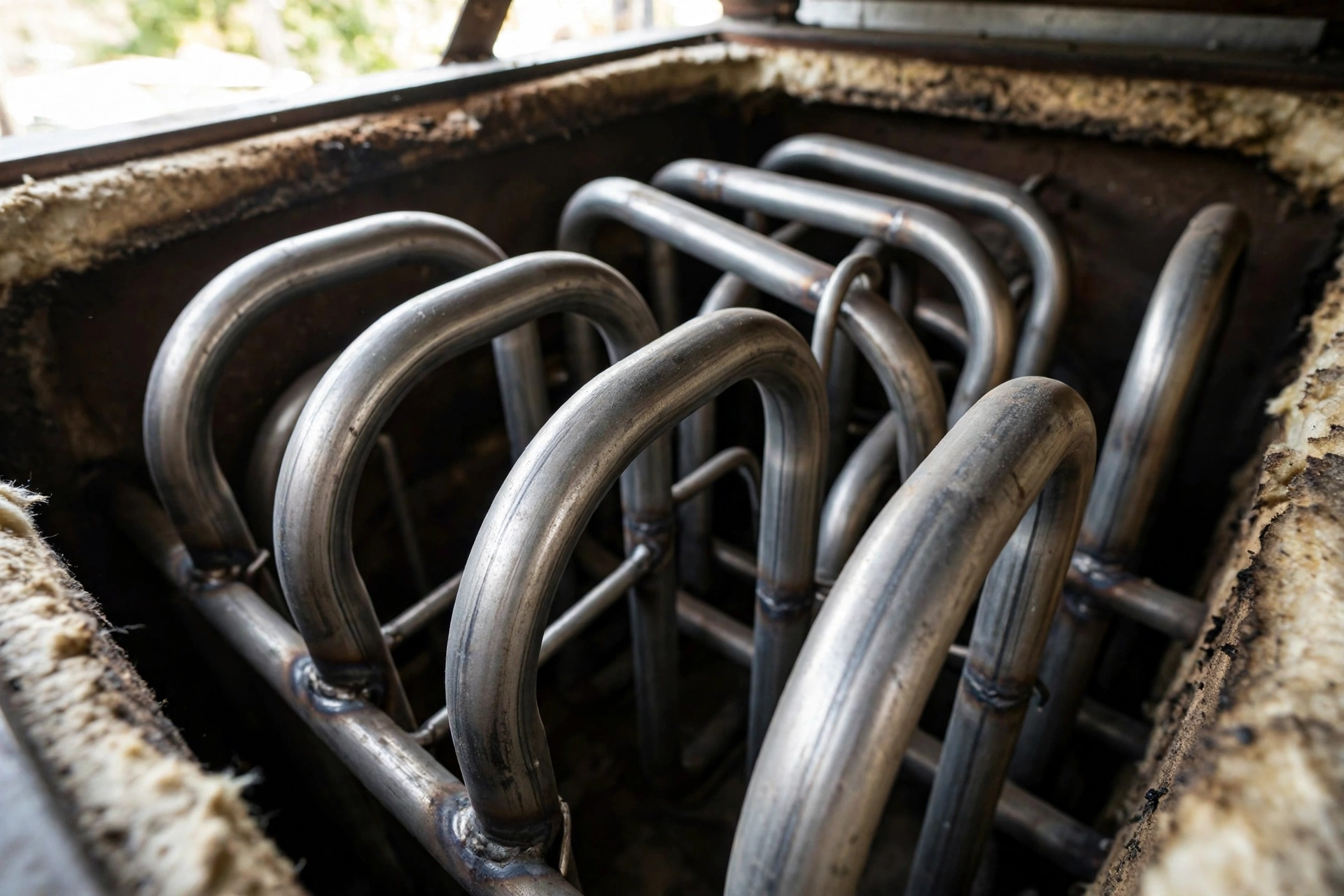
The heat exchanger is the safety heart of a gas furnace. We inspect it thoroughly and explain exactly what we find, with evidence.
The heat exchanger keeps combustion gases separate from the air your family breathes, so cracks and corrosion are treated seriously. Manassas Furnace Pros inspects heat exchangers in Manassas and Prince William County furnaces, explains findings clearly, and advises when repair is realistic and when replacement is the safe path. If your furnace shows rust, flame disturbance, or repeated limit trips, call (703) 962-7410 to arrange a careful inspection today.
The heat exchanger is the metal assembly inside a gas or propane furnace where hot combustion gases pass on one side while household air flows over the other. Heat transfers through the metal walls, the warmed air continues into your ducts, and the exhaust gases leave through the vent. That separation is the whole point of the design, and it is why the condition of this component carries more weight than any other part in the furnace cabinet. Exchanger condition also affects everyday performance before any crack appears, since heavy rust scale insulates the metal and burner deposits disturb heat transfer. A furnace can grow louder, run longer, and heat less evenly as that decline builds. Maintenance visits that note these changes early give Manassas homeowners time to plan instead of reacting during a winter failure.
Every heating cycle stresses the exchanger as it heats and cools, expanding and contracting season after season in your Manassas home. Over years of Northern Virginia winters, that movement, combined with moisture and combustion byproducts, can produce cracks, rust, and thinning, usually starting where temperatures and stress are highest. The inducer motor, burners, and limit switch all interact with the exchanger, so faults elsewhere can accelerate its wear if they go uncorrected. Metal fatigue concentrates where flames strike hardest and where temperature swings are sharpest, often deep inside cells that casual inspection cannot see. That reality shapes how conclusions are drawn, using combined evidence rather than one dramatic test. We explain the limits of any single method and why the overall pattern matters more than a headline finding at your home.
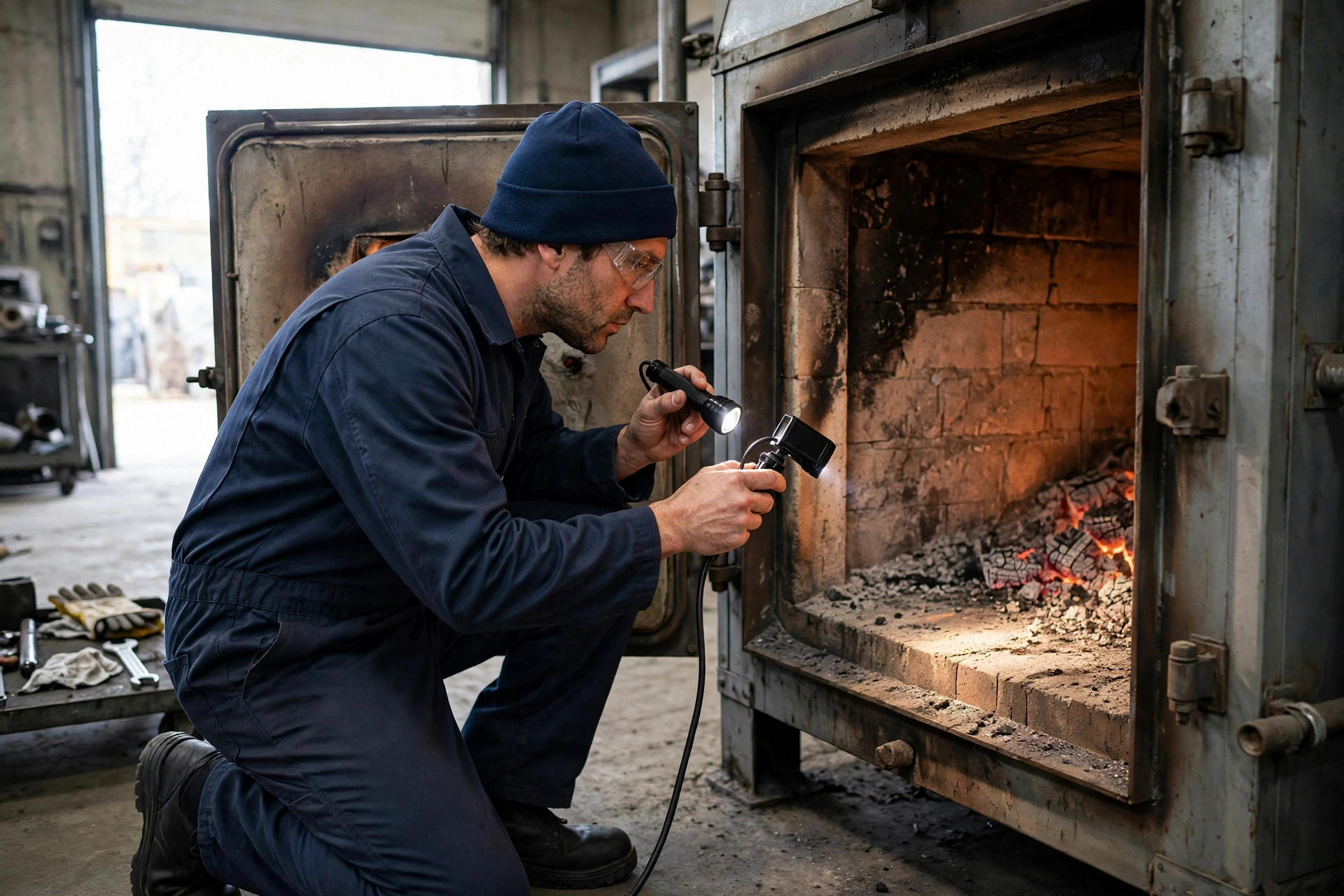
Inspecting a heat exchanger properly takes more than a glance through the burner opening. We use visual inspection with lights and mirrors where access allows, watch flame behavior when the blower starts, since a crack can let air disturb the flame, and review the furnace history for related signs like soot, rust flakes in the cabinet, or repeated overheating. Carbon monoxide testing around the system adds another layer of information to the picture. Households understandably ask for certainty, and we give the most definite answer the evidence allows. Where findings are borderline, monitoring with a dated record and a recheck plan can be reasonable, provided no safety sign is present. Where a crack is confirmed, the path is clear, and delay only adds risk without adding information for your family.
Findings are explained in plain language, including what was seen, what it means, and what remains uncertain. Some exchangers show surface rust that bears monitoring rather than alarm, while a confirmed crack changes the conversation entirely. We do not exaggerate a finding to sell equipment, and we do not minimize one that affects safety. Prince William County homeowners get the reasoning, the options, and time to decide, except where immediate safety requires shutting the system down. Detectors, inspection, and maintenance form layers that work together, and no single layer replaces the others in a fuel burning home. We encourage all three in Prince William County homes with gas or propane heat. That layered approach is how responsible furnace care actually protects people, rather than relying on one device or one annual glance inside the cabinet.
Unlike an igniter or a flame sensor, a heat exchanger is rarely a simple repair. On some younger furnaces, exchanger replacement is technically possible, but the labor involved is extensive and the surrounding components are the same age as the failed part. For most older systems, a cracked exchanger means the furnace has reached end of life, and putting the work into a new system serves the household better than rebuilding the old one. If exchanger replacement is viable for a younger furnace, we price the conversation in terms of remaining system value, the age of the blower and controls, and expected service afterward. Sometimes the numbers support it, often they do not. Either way, you receive the comparison in plain form and decide without urgency tactics or manufactured deadlines attached.
When replacement is the right path, we handle it as a planned installation, sized to the home with plenum, venting, and condensate work done correctly. When the exchanger is sound and the real fault lies elsewhere, perhaps a limit switch tripping from low airflow or a burner problem disturbing the flame, we repair that cause instead. Manassas homeowners should expect the recommendation to follow the inspection, not precede it, every single time. Whatever the outcome, the inspection ends with a written style summary in plain language: what was checked, what was found, and what is recommended next. Keep it with your furnace records. Should you seek a second opinion, that summary helps another professional start from evidence rather than from the beginning again at your Manassas home.
Several signs can point toward exchanger trouble, though none proves it alone. Flames that waver, roll, or change when the blower starts suggest air is entering where it should not. Soot buildup, rust flakes below the burners, and a furnace that trips its limit switch repeatedly all deserve attention, especially together on an older system in Manassas. Flame color or shape changes reported by homeowners are worth taking seriously, because residents see the furnace through its viewing port or notice sound changes across many cycles. Those observations guide where inspection focuses first.
Household symptoms matter too. Headaches or flu like feelings that ease away from home, a carbon monoxide detector alarming, or unusual smells during heating cycles should never be ignored. Treat a detector alarm as an emergency first, ventilate, and contact the appropriate services before worrying about the furnace itself or any repair timeline. Soot inside a gas furnace is never a normal decoration, and its presence near burners or the exchanger entrance raises questions about combustion quality. Causes range from dirty burners to venting problems, several of which are repairable. Finding soot early protects the exchanger from the overheating and corrosion that follow poor combustion over time.
The only reliable answer comes from inspection and testing. Many furnaces showing one of these signs turn out to have airflow or burner faults instead, which are straightforward repairs. Call (703) 962-7410 to have the system checked properly, and avoid running a furnace you suspect has an exchanger problem until it has been cleared. If a carbon monoxide alarm sounds, treat the alarm as the authority in that moment and act on its instructions first, including leaving the home if directed. Furnace questions come afterward, once everyone is safe. We will never be offended by a cautious response, and we would rather inspect a cleared system than the alternative.
True repairs to the exchanger metal itself, such as welding a crack, are not a safe or lasting solution, because the surrounding metal has been stressed by the same years of heating and cooling. A weld does not restore the component, and the crack pattern usually continues. For that reason, reputable practice treats a cracked exchanger as a component or system replacement decision, not a patch. Protecting a sound exchanger going forward is mostly about airflow and combustion care: clean filters, healthy blower performance, correct burners, and sound venting. Those basics are unglamorous and effective.
Where the exchanger is intact, related problems often can be repaired. Burners that impinge on the surface, airflow faults that cause overheating, and venting issues that raise operating temperatures all damage exchangers slowly when ignored. Correcting those causes protects a sound exchanger and can add useful life to the furnace in your Prince William County home. Second opinions on exchanger findings are reasonable, and a confident service provider should welcome them when safety timing allows. Ask for the evidence, the test methods used, and the locations involved. Clear answers strengthen trust, while vague urgency weakens it.
We give you the inspection evidence and the options with their reasoning, including exchanger replacement where the furnace age genuinely supports it. The decision is yours, made with a clear understanding of safety, remaining system life, and what each path involves. That honesty is the service, whichever option you choose. Renters noticing these warning signs should contact the property owner promptly rather than arranging furnace work directly, while still treating alarms as emergencies. Owners benefit from early notice too, since exchanger decisions take planning. Everyone involved is better served by a calm inspection than by a mid winter failure in an occupied Manassas home.
Safety questions deserve direct answers. Here they are.
Describe what your furnace is doing and we will point you to the right next step.
Call (703) 962-7410Inspection combines visual checks with lights and mirrors, observing flame behavior as the blower starts, reviewing signs like soot and rust, and testing around the system. Access varies by furnace design. The goal is evidence about the exchanger condition, explained clearly, before any recommendation is made.
No, a confirmed crack means combustion gases can mix with household air, which is a carbon monoxide risk. The safe response is to shut the system down until the exchanger or furnace is replaced. We know that is hard news in winter, and we explain the finding carefully.
Years of heating and cooling cycles expand and contract the metal until it fatigues, and the process speeds up with overheating from low airflow, oversized equipment short cycling, or poor maintenance. Rust from moisture and combustion byproducts weakens the surface further over the life of the furnace.
Detectors are an essential warning layer and every home with fuel burning equipment should have them near sleeping areas, but they are not a substitute for equipment inspection. A detector alarms after gas is present.
Yes, restricted airflow lets the exchanger run hotter than designed, and repeated overheating is a leading driver of metal fatigue and early cracking. That is why filter neglect and blower problems matter beyond comfort. Keeping airflow healthy is one of the simplest ways to protect the exchanger.
No heat tonight? We find the failed part and get the heat back on, around the clock.
Ignition, burner, and gas control problems found by sequence testing and fixed.
Heat strips, sequencers, and air handler faults diagnosed and repaired.
A full seasonal tune-up that keeps heat steady and catches wear early.
Heat exchanger concerns deserve a careful look and a straight answer. Call for an inspection.
Call (703) 962-7410