
Furnace Care for Homes Along the Dulles Corridor
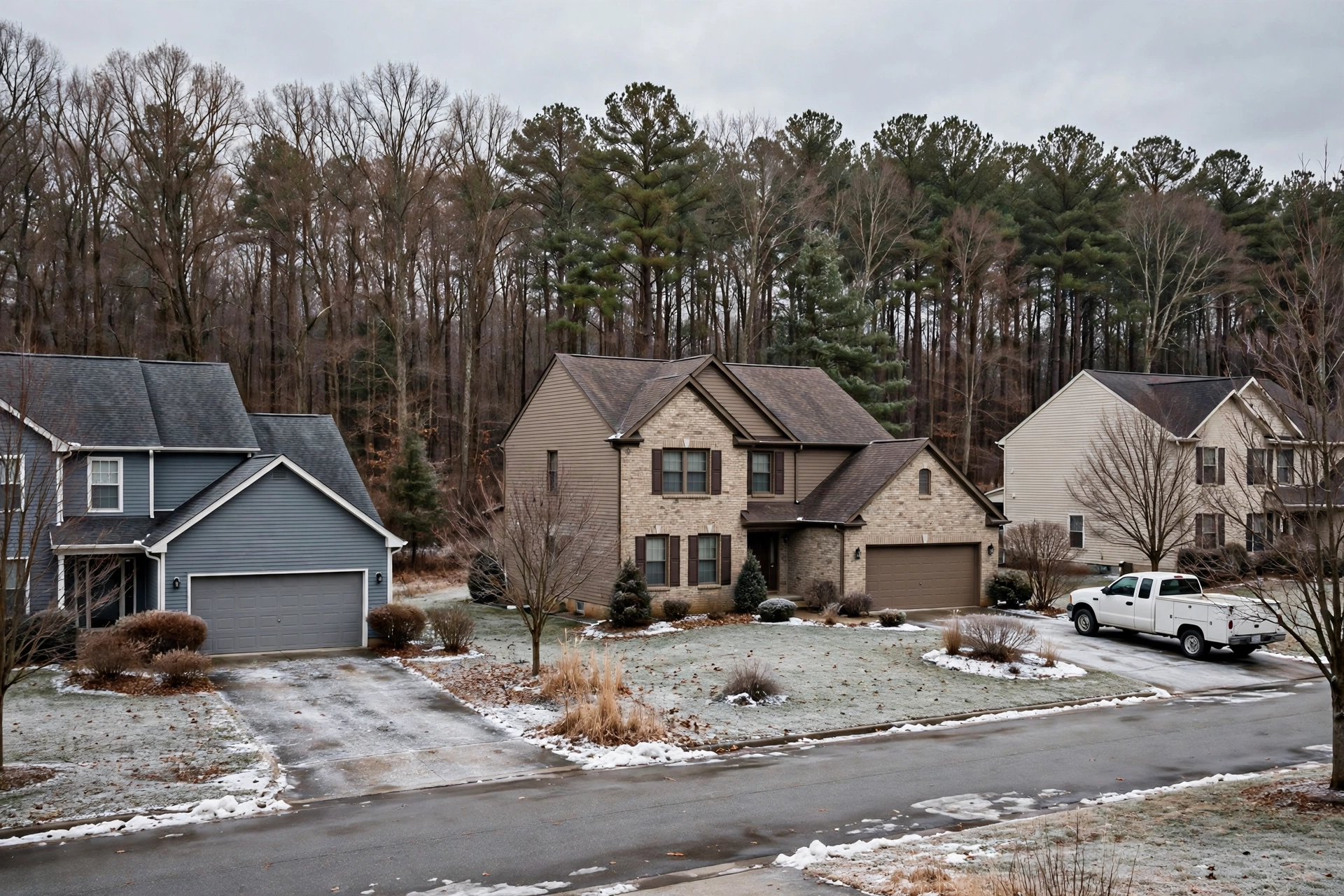
Chantilly grew up along the Dulles corridor, where airport routes, office parks, and busy highways sit just beyond quiet residential streets. That contrast shapes heating service here, because a neighborhood can feel calm and tucked away while sitting minutes from some of the busiest roads in Northern Virginia. Homes range from colonials on wooded lots to condo communities where furnaces serve compact floor plans stacked close together. Our technicians move through all of it in a single day of calls. Understanding which Chantilly you live in helps us diagnose the system waiting for us.
Many Chantilly households include commuters who leave early and return late, so a furnace failure often announces itself at the worst possible hour of the day. The house cools through a workday, the problem is discovered at dinner, and the call comes in as temperatures outside keep falling. We plan Chantilly visits with that reality in mind, asking careful questions up front so the first trip carries what the repair is likely to need. Clear updates matter too, especially when a homeowner is coordinating access from an office or an airport. Heat restored the same evening is always the goal.
Greenbriar and Brookfield Colonials From Another Era
Greenbriar and Brookfield were built mainly in the 1970s and 1980s, when brick colonials, split levels, and ramblers spread across what was then the growing western edge of Fairfax County. Those homes were solidly built, and many of their furnaces have been replaced once already, leaving a mix of equipment ages on every street. Ductwork, however, is often original, sized for the systems and expectations of another era entirely. When a newer furnace pushes air through older ducts, noise, pressure, and uneven rooms can follow. We check the whole path the air travels, not just the cabinet in the basement.
Basements and utility rooms in these neighborhoods tell the story of each house plainly, with water heaters, laundry, and furnaces sharing close quarters. Access can be tight, clearances smaller than modern practice, and venting routed through spaces that later renovations quietly reshaped around it. A careful technician reads those clues before condemning any single part, because the real fault often involves how the system fits the house. Filters in these homes also hide in return grilles that owners overlook for entire seasons. Finding and fixing those small oversights often restores performance that seemed lost for good.
Landmarks From Sully Plantation to the Udvar-Hazy Center
Few suburbs hold landmarks as different as Chantilly does, from the Sully Plantation historic site to the soaring hangars of the Steven F. Udvar-Hazy Center. Sully preserves the home of a family that farmed this land when the area was countryside, while the museum displays aircraft and a space shuttle beside the airport economy that replaced those fields. Homes near these landmarks span every era between those two stories, and their heating systems do as well. A furnace near Sully may serve a house older than the subdivision pattern around it. Each visit starts by reading the house, not assuming it.
The museum and the airport corridor also bring Chantilly a steady flow of shift workers, flight crews, and families whose schedules rarely match a nine to five pattern. Heating trouble in those households cannot always wait for a convenient weekday morning to be addressed properly. We keep that in mind when scheduling, offering clear windows and honest updates for people whose work runs on airline time. Knowing the area means knowing how its people actually live through the winter months. That local understanding is built into every Chantilly call we take, from the first question to the final test cycle.
Condo Communities Near Route 50 Heat Differently
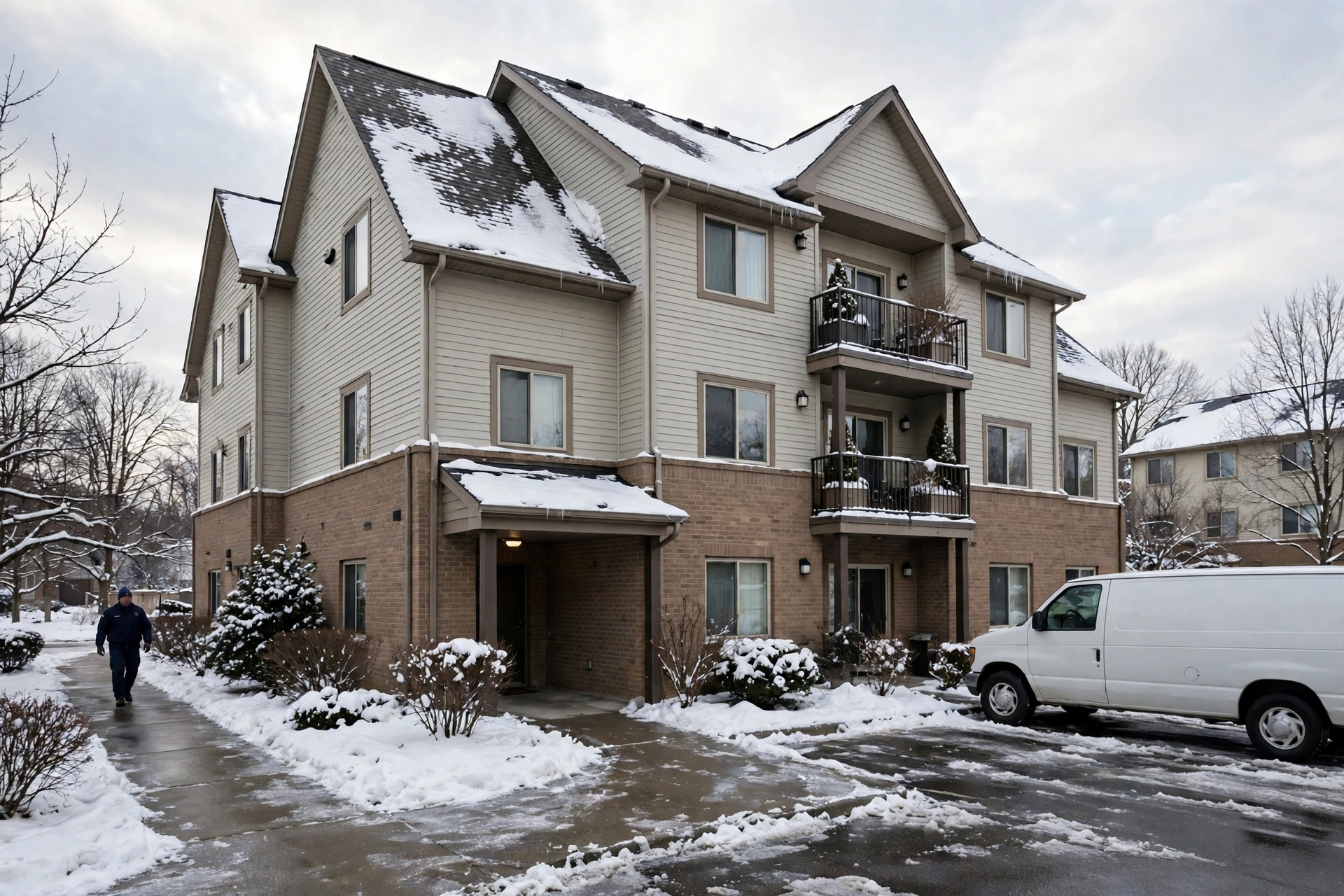
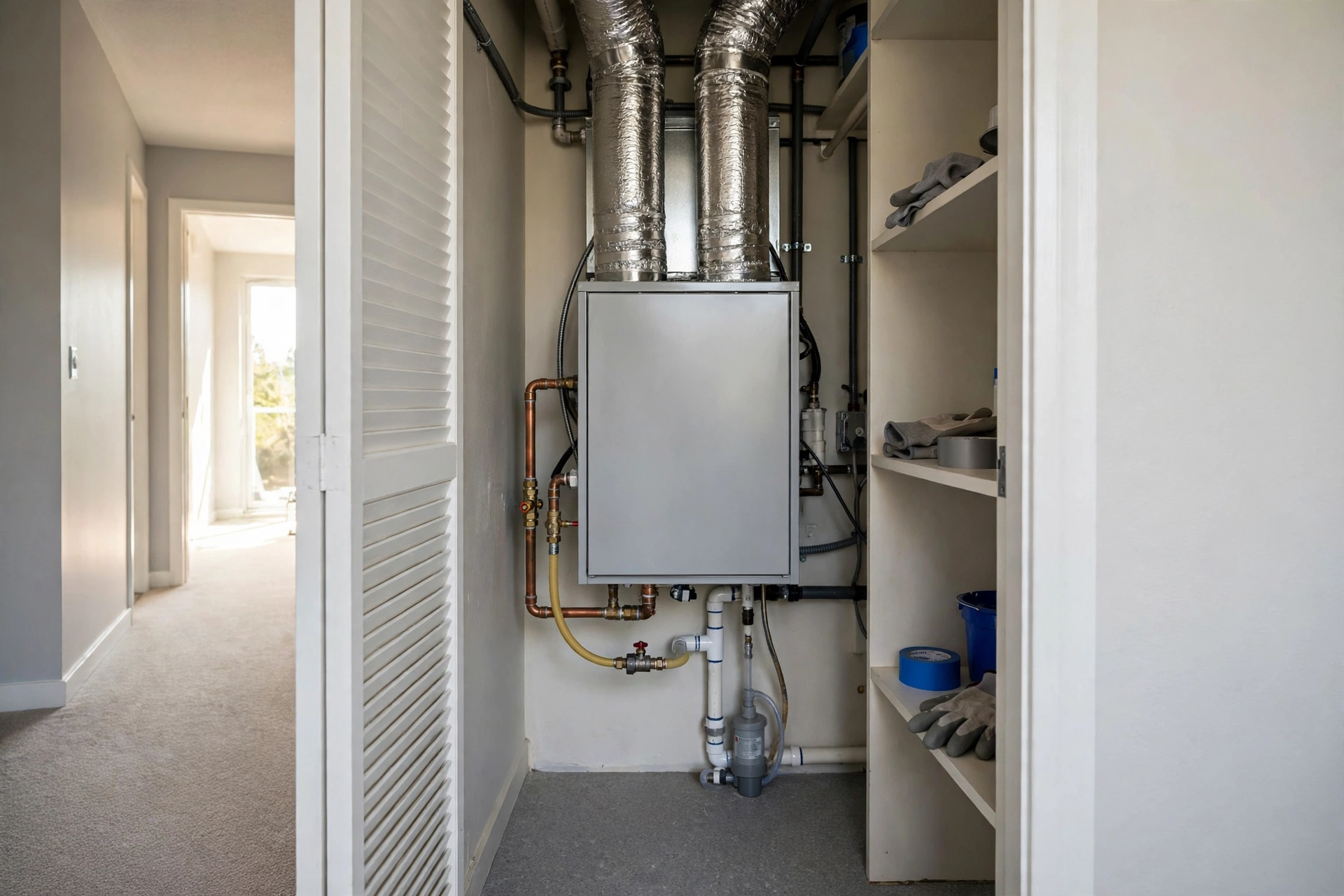
Along Route 50 and the streets feeding into it, condo communities and townhouse clusters give Chantilly a second, denser kind of housing stock. Furnaces in these homes often sit in closets, attic spaces, or compact utility rooms where every inch was planned and little room remains for error. Tight installations run warm, collect dust quickly, and make filter changes awkward enough that they slip down the chore list. That combination quietly shortens the life of igniters, motors, and control boards over the years. When a condo furnace fails, access details matter as much as the diagnosis itself.
Shared walls change the heating picture too, shielding some rooms from the cold while corner units take the full force of winter wind on two sides. Neighbors above, below, and beside a unit all influence how hard its furnace works through a cold week in January. We ask about the position of the home within its building, because a ground floor corner condo and an upper interior unit rarely share the same problem. Parking, gate access, and building rules also shape how smoothly a repair visit runs here. Share those details when you call, and the visit starts ahead of schedule.
Nor'easters and Open Ground Around Dulles in Winter
Winter storms reach Chantilly across some of the flattest, most open ground in the region, with the airport fields offering little to slow a nor'easter down. Snow piles against fences and foundation walls, wind drives into attic vents, and temperatures can swing from thaw to hard freeze within a single day. Furnaces here cycle through that whole range, resting during a mild afternoon and then running nearly nonstop by midnight. That rhythm is hard on parts that are already near the end of their service life. Many of our Chantilly cold weather calls trace back to a component that failed exactly that way.
Freeze and thaw cycles also work on the outside of the system, especially the vent terminations and condensate lines of high efficiency furnaces in newer Chantilly homes. A drain that freezes shut overnight can stop a healthy furnace completely by morning, leaving a house cooling while the equipment itself is sound. Clearing snow from intake and exhaust pipes after each storm is a small habit with an outsized payoff here. Inside, steady thermostat settings help more than dramatic overnight setbacks during these swings. Consistency keeps cycles predictable, and predictable cycles are gentler on every moving part in the system.
Common Failures in 1970s and 1980s Chantilly Systems
Homes from Chantilly building boom years now carry furnaces of many ages, but the failure patterns we see repeat with familiar regularity each winter. Igniters crack from thousands of heating cycles, flame sensors coat over and begin dropping the burner out mid cycle, and blower capacitors weaken until motors strain audibly at startup. In split level homes, the blower also fights a duct layout that sends air up, down, and sideways through the house. That extra resistance makes a tired motor fail sooner than it would in a simpler floor plan. Testing separates a dying part from a struggling system.
Age shows in quieter places as well, like inducer motors that grow louder each season or pressure switches that respond slowly on cold mornings. A furnace that needs two or three tries to stay lit is asking for attention, even if it eventually warms the house every time. Waiting usually converts that minor repair into a no heat call during the coldest week of the year. We would rather meet a Chantilly furnace during a planned visit than during an emergency at midnight. Early attention is almost always the smaller, calmer, and more affordable path for the homeowner.
Clues a Chantilly Furnace Gives Before It Quits
Before a Chantilly furnace stops outright, it usually leaves a trail of small changes that a busy household can easily miss. The system may run longer to reach the same setting, start with a new click or hum, or leave the far bedrooms cooler than they were last winter. In Brookfield and Greenbriar, those far rooms often sit over garages or at the ends of original duct runs, so they report airflow problems first. A filter that comes out gray and bowed has been quietly taxing the blower for weeks. Each clue narrows the diagnosis before we even open the cabinet.
Pay attention to patterns tied to time of day, because Chantilly homes reveal different faults at different hours of a cold day. A furnace that works all afternoon but fails during the coldest pre dawn hours is often losing a marginal part to temperature, not chance. Short cycles that repeat every few minutes point toward airflow, sensing, or safety limit trouble worth testing in sequence. Note what the thermostat displayed, whether vents blew warm or cool, and how long each attempt lasted. Sharing that timeline when you call turns a vague worry into a focused repair plan.
A Clear Repair Process for Busy Corridor Households
Our Chantilly repair process is built for households that measure their days in commutes, school runs, and shift changes along the corridor. The first call gathers the system age, the symptoms, the fuel type, and the access details for your street or building community. You get a realistic arrival window and updates if traffic on the corridor changes the plan, because silence helps nobody waiting in a cooling house. At the home, we confirm the symptoms with you and then test the furnace in its own working order. Findings are explained as they emerge, not saved for a surprise at the end.
Once the fault is identified, we describe the repair, the parts involved, and what testing will confirm before any work beyond diagnosis begins. There is no guessing and no replacing parts in the hope that one of them was the problem all along. After the repair, full heating cycles run while we check temperatures at vents in the rooms you flagged as cold. We also look at the filter, the condensate path, and any second issue that the season is likely to expose soon. You finish the visit knowing what failed, what was fixed, and what to watch.
Filters, Ducts, and Airflow in Split Level Homes
Split level homes are a Chantilly staple, and their stair stepped floor plans create heating challenges that a single thermostat struggles to solve alone. Warm air collects on the upper level while lower rooms near the garage or slab stay cooler, no matter how faithfully the furnace runs. Closed interior doors, blocked returns, and furniture over vents widen that gap through the winter months. During a repair visit, we measure what the vents actually deliver rather than trusting how the house feels at the thermostat. Sometimes the furnace is healthy and the air simply is not reaching the rooms that need it.
Filter discipline matters even more in these homes, because restricted airflow raises temperatures inside the furnace while lowering comfort in the rooms farthest away. A high efficiency filter that is too restrictive for an older blower can cause the same trouble as a dirty standard filter left in place too long. We help Chantilly owners match filter type to the equipment they actually own, then set a change rhythm tied to pets, dust, and season. Clean air paths let the blower move heat with less strain and fewer safety trips. It is the simplest performance improvement most homes can make.
Warm Homes in Chantilly When Temperatures Crash
When temperatures crash across the Dulles corridor, Chantilly homeowners need a furnace company that treats a cold house as the urgent problem it is. Manassas Furnace Pros routes Chantilly calls daily, stocks the igniters, sensors, capacitors, and motors that fail most often in homes of this era, and communicates honestly about timing. If a system is simply worn out, we will say so and explain the options without turning a hard night into a pressure sale. If it can be repaired soundly, we repair it and prove the result with full test cycles. Either way, you get the truth about your system.
From Greenbriar colonials to Brookfield split levels and the condo communities along Route 50, our Chantilly work follows one standard everywhere. Diagnose the real fault, explain it in plain language, fix it carefully, and leave the home warmer than we found it. Keep our number, (703) 962-7410, saved before the coldest weeks arrive, so a furnace problem becomes a phone call instead of a scramble. Chantilly winters reward households that prepare in the fall and act early at the first warning sign. We are ready to help with both, whenever the call comes in.